QSO in a Kilo(gram)
I carry an HF ham radio with me most places I go, plus all the equipment that I need to make a contact (a “QSO”). I gave myself a budget of 1 kilogram, so that I’d come up with something that was comfortable to carry with me. I want to be able to operate, including “activating” parks for POTA, spontaneously. I’m primarily a low-power (“QRP”) Morse code (“CW”) operator. This made my task easier.
This is a perpetual work in progress; by the time you read this, I’ve probably changed something!
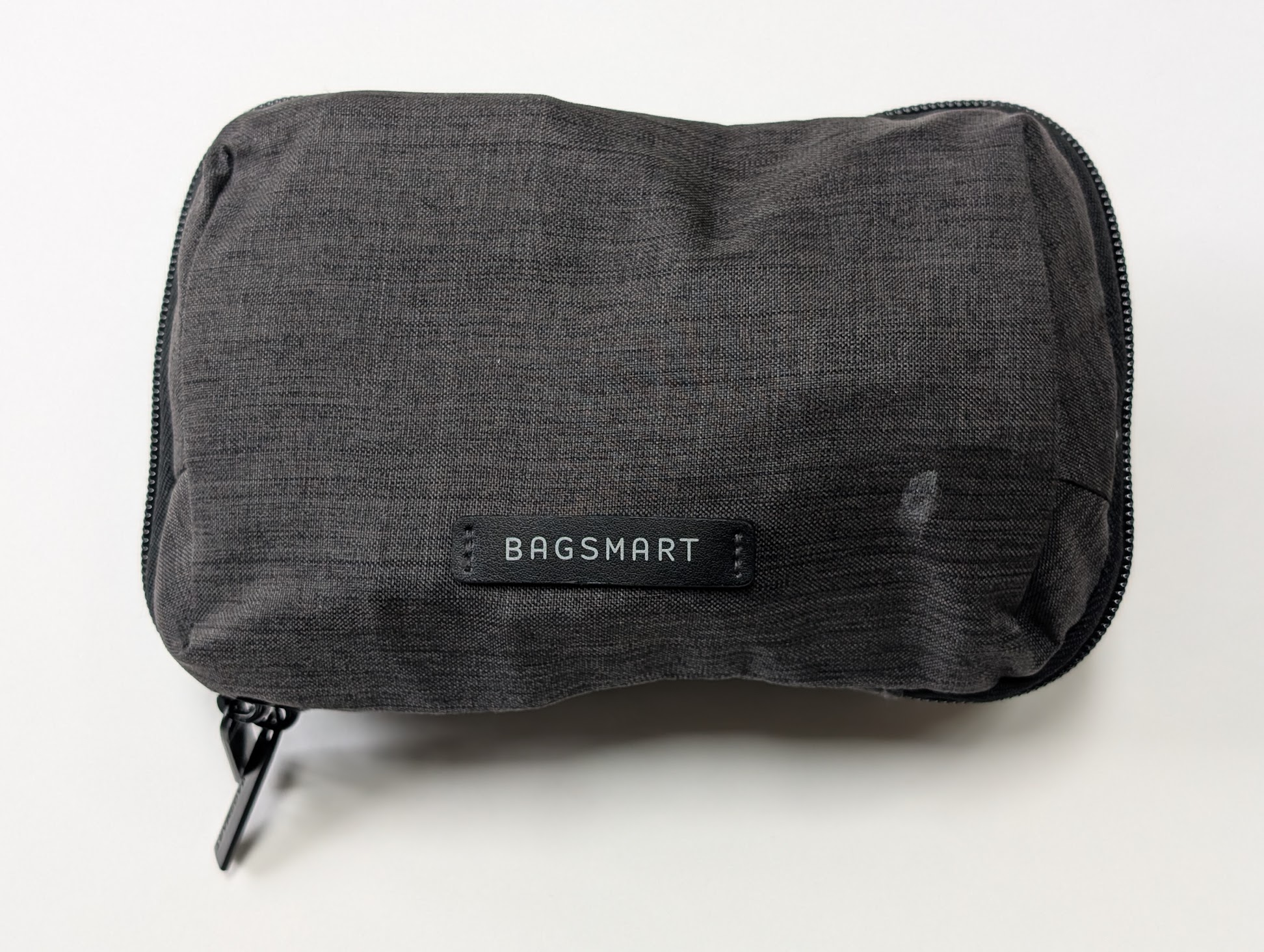
This bag fits in one hand and disappears into my backpack:
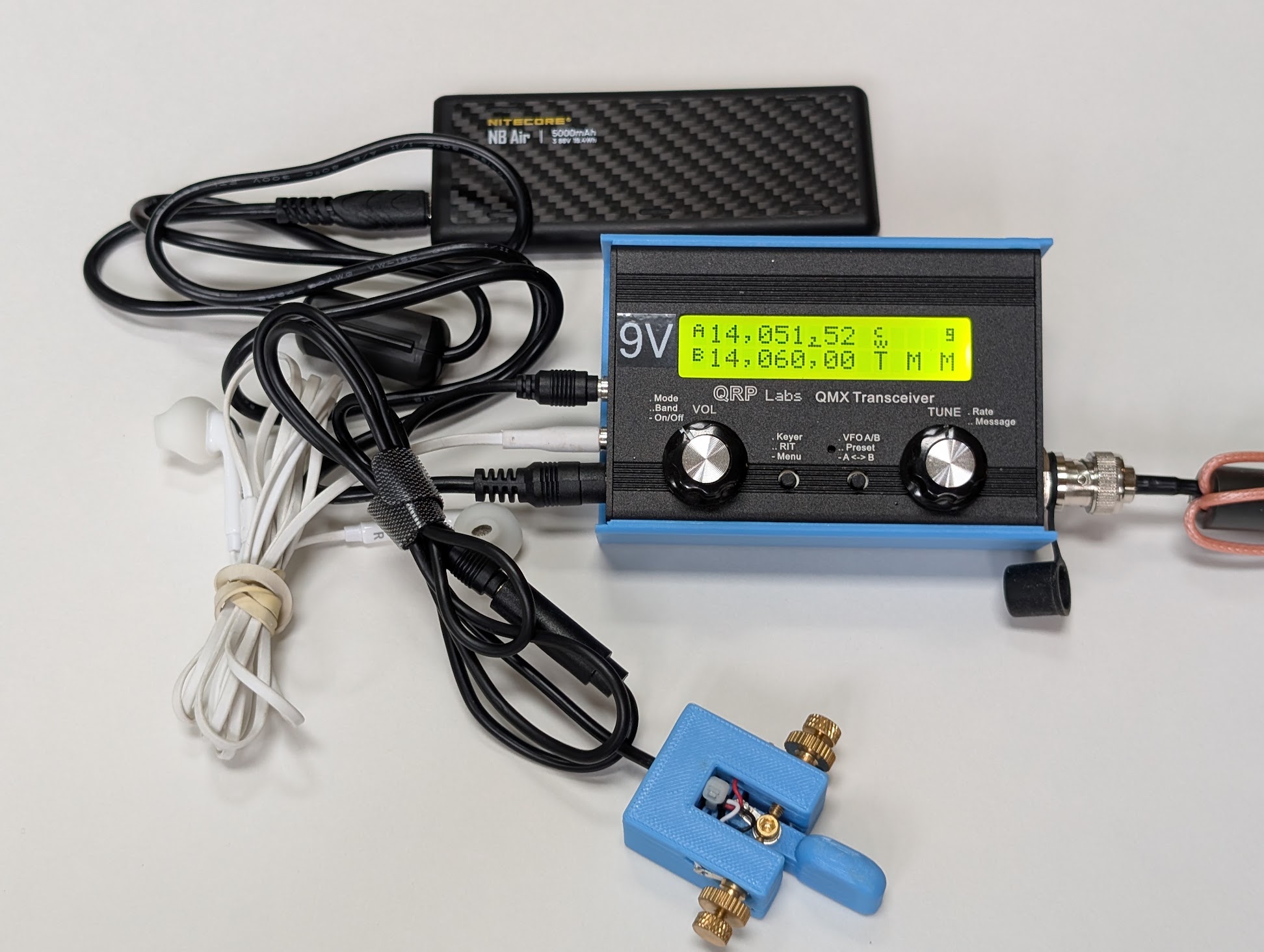
I don’t want to be afraid to carry it with me in case it is damaged or lost. So I chose relatively inexpensive components:
Requirements
This was how I evaluated items as I put together my kit.
- Power: Only 5 Watts needed for CW QRP
- Only common bands needed; I’d like to go down to at least 40 meters but unlikely to work above 15 meters much
- Inexpensive — loss or damage is sad but not debilitating
- Durable — lives in my backpack, jumbled with whatever else is there
- Quiet operation — I like to be inaudible and invisible
- Redundancy — Failure of weakest parts shouldn’t block me from operating unnecessarily
- Extensibility — Build a system, don’t buy a box
Components
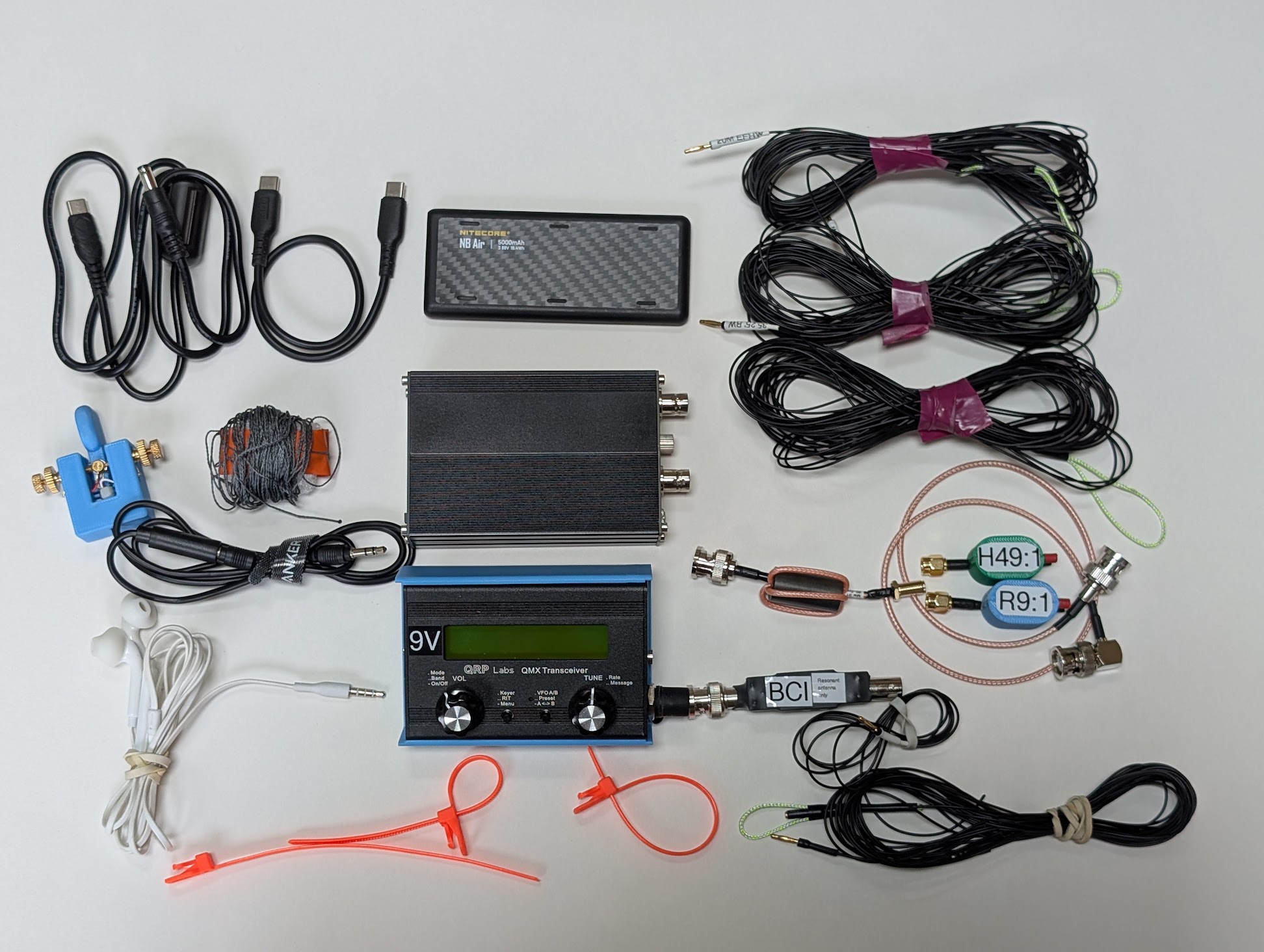
- Bagsmart bag (components just barely fit)
- Mid-band QMX (60m–15m), built for 9V (voltage not important here)
- 3D-printed hard case/stand
- M-15 tuner (lightest ATU-10 variant I’ve found; has only one battery so weighs less), coax jumper (included), and USB-C cable to charge it if necessary (or do digital modes by connecting to a computer)
- My 3d-printed key, miniaturized (by changing parameters and removing features)
- K6ARK microphone (so far unused; I like CW)
- Nitecore NB Air Ultra +
9V trigger cable9V male trigger module connected to an official QRP Labs barrel plug. - 20m EFHW + Mix 43 FT50 49:1 unun in 3d-printed case (design not yet shared, needs some improvements)
- 2x 35.5’ random wires make 71’ (+20m is 68.5’ or 104’ random wire) for four different lengths + Mix 43 FT50 9:1 unun in 3d-printed case (same unshared design)
- Short (for 20m EFHW) and long (for random wire) counterpoises
- 4-turn mix 31 choke made with RG-316 coax
- K9DP BCI filter which I needed when I didn’t have it and haven’t needed since
- 2 oz tungsten throw weight wrapped in foam, with graphite-lubricated UHMWPE braided fishing line as throw line
- My favorite cheap wired earbuds
- Reusable cable ties and electrical tape for holding things together as needed
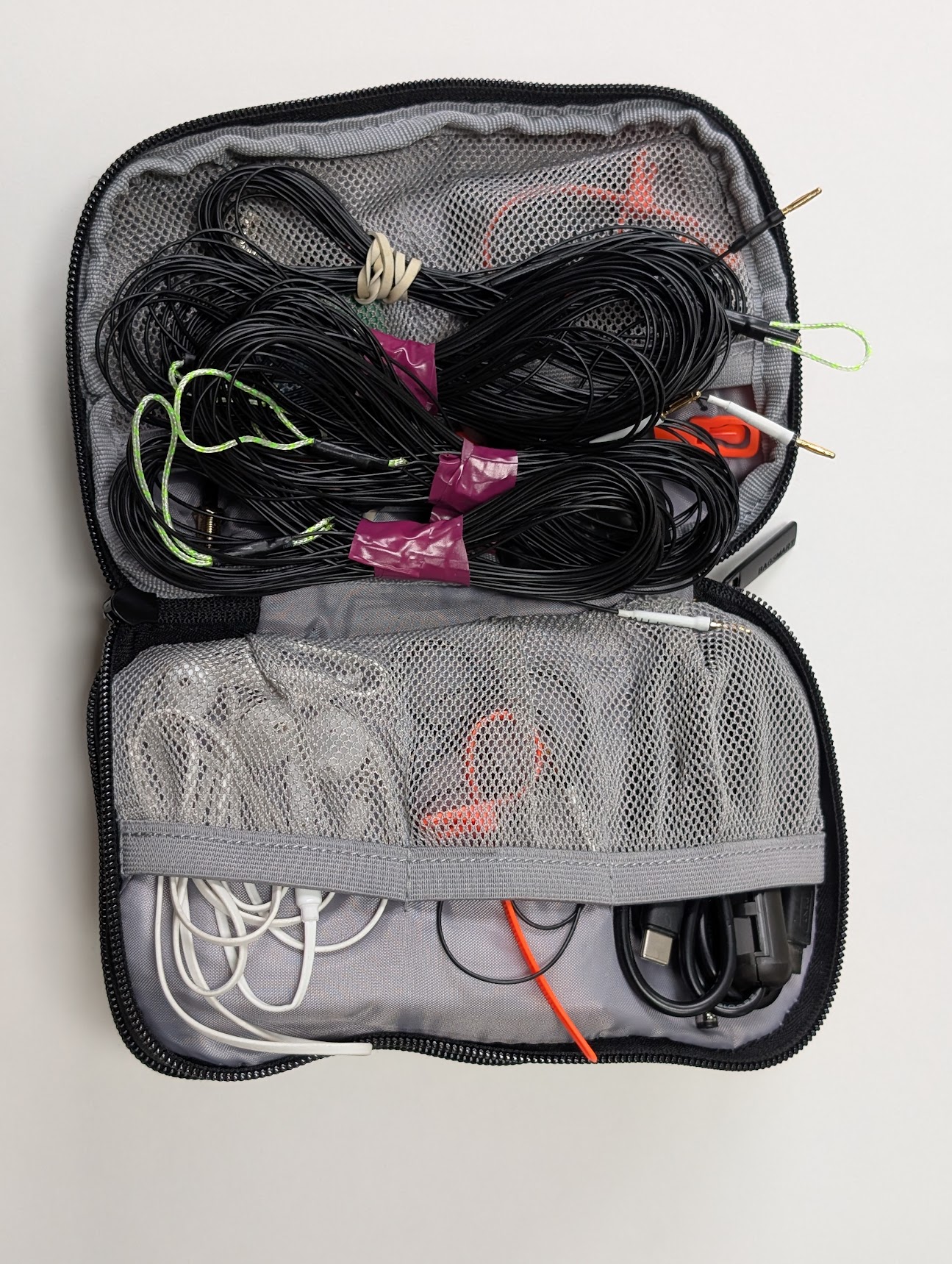
All the antenna wires use 2mm bullet connectors, and except for the short counterpoise, they all have a male connector on one end and a female connector on the other end so that they can be assembled end-to-end. Also, on the female end, they have loops of dacron twine to connect them to the throw line, and when connected in series to make a longer antenna, to each other. I use electrical tape to bundle the wires (wrapped in a figure-8 to avoid twisting) when I put it away, and the same electrical tape holds the twine from one wire to the plug on the next wire, so that it doesn’t come apart when deployed.
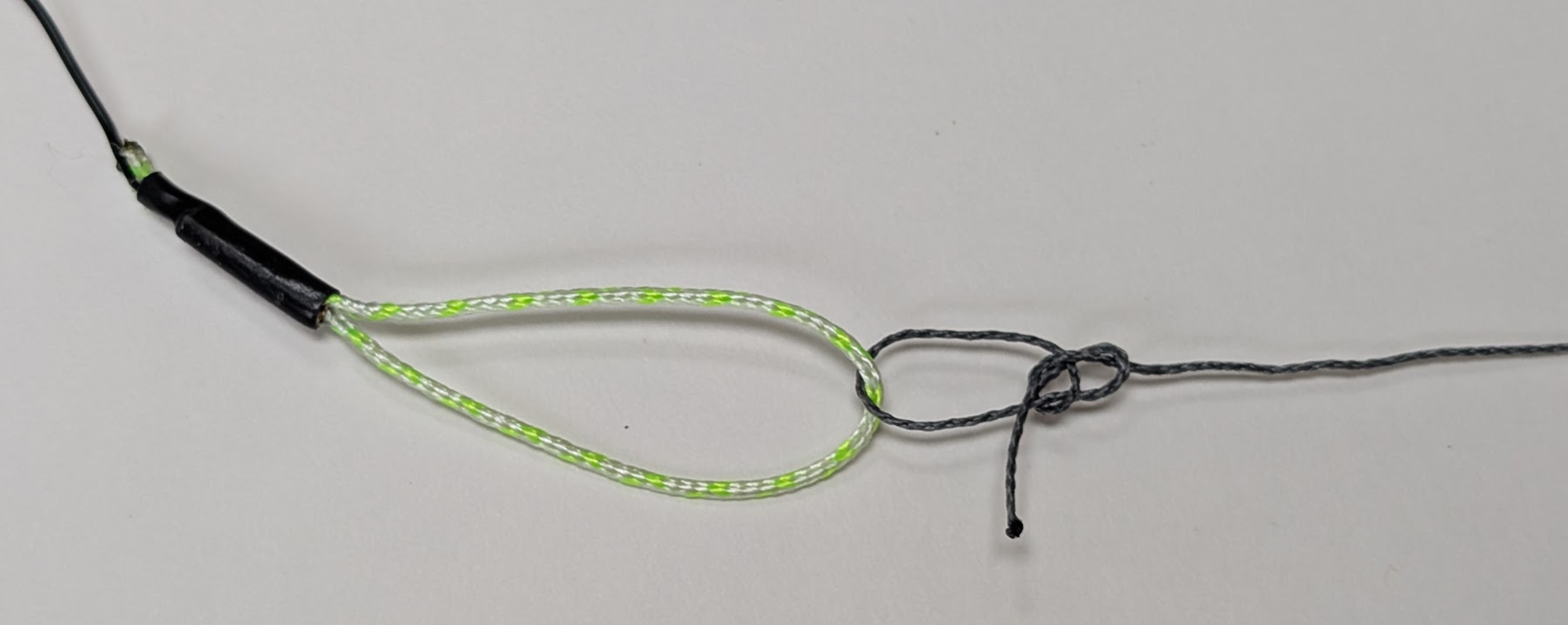
Except for the strain reliefs (not used here for plain end-fed wires), this is the technique I document in Avoid Alligators: Always add links, not knots which weaken wire.
Layout
The top compartment is busy with most of the bits and bobs; the antenna wires are just stuffed in.
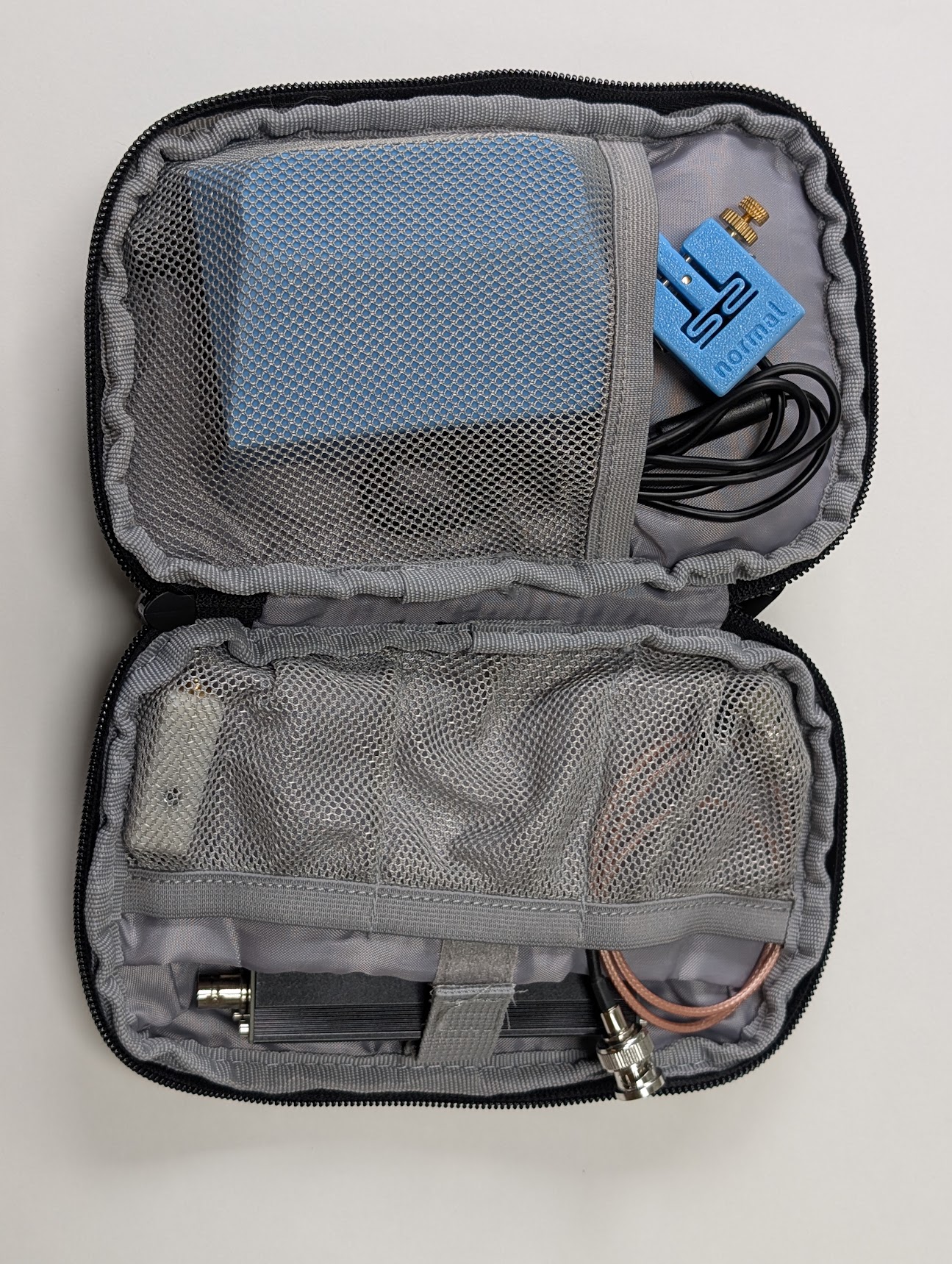
The bottom compartment holds the radio, key, tuner, coax jumper, and a few small items of overflow from the over-filled top compartment.
Beyond the Kilogram: Cheating
I’m already carrying my phone (and often a computer or two, and sometimes a tablet), so I don’t count that weight for logging against my budget. I do not carry pencil and paper. If I can’t log electronically, I probably just won’t operate. I hate writing with pencil and paper!
Sometimes I throw a 300g SOTA6 mast in my bag to make it easier to get a line up without my throw weight. Tape one end to the end of the mast and lean it up against some twigs, and plug the other end into the appropriate unun, add the tuner if it’s a random wire, and I’m on the air. It’s a lot faster than getting exactly the right shot with the throw weight.
When I intentionally go out for POTA with this radio, sometimes I bring my 286g linked dipole which has links for every band from 40m to 6m, using 2mm banana plugs and dacron twine strain relief. If I’m going somewhere without chairs, I have a 500g Helinox Zero chair I can throw into my backpack, and if it’s going to be cold I have half-fingered knit gloves.
I don’t count any of that against my EDC weight.
The other side of redundancy
If I am bringing a different radio out to do POTA, I probably bring this radio too. It might be this entire kit, or just something from it, that saves the day. Recently, I had been working on my Morse code key from another radio and forgot to put it back in the case. So I just pulled the miniature key out of the QSO-in-a-kg bag and used it with the other radio.
The future
I could save a lot of weight by moving the QMX and tuner into 3d-printed cases. I might get enough from that to remove the display and knobs entirely from the QMX and instead use an M5Stack tab5 as a panadapter without blowing the budget! That would require a different power architecture, though, so for that I’ll probably just build a different radio. Maybe based on a 40m-10m QMX (doesn’t have 30m, though).
Some day maybe I’ll come up with a Park in a Pound to make the QSO in a Kilogram seem heavy.
The past
I first described this in a short presentation I gave at my club, RARS.